
Introduction
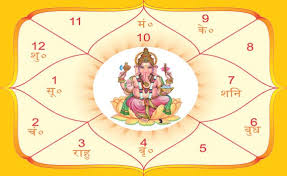
Have you ever wondered why some people seem naturally lucky, talented, or destined for success? The answer might lie in their Janam Kundali — a cosmic blueprint that reveals the story of one’s life.
In Vedic astrology, Janam Kundali (or birth chart) is not just a piece of paper filled with symbols and planets. It’s a map of your destiny, showing who you are, what your strengths are, and what life path awaits you.
Whether you’re a believer in astrology or simply curious, understanding your Janam Kundali can offer deep insights into your personality, relationships, career, and future.
Let’s explore how it works, why it matters, and how you can use it to guide your life decisions.
What Is Janam Kundali?
A Janam Kundali, also known as a birth chart or natal chart, is a detailed record of the planetary positions at the exact date, time, and place of your birth.
Astrologers believe that at the moment you’re born, the planets, stars, and zodiac signs form unique patterns — and these patterns influence your life events, behavior, emotions, and destiny.
Your Janam Kundali acts like a cosmic fingerprint — no two charts are exactly alike.
It is divided into 12 houses, each representing different aspects of your life such as career, relationships, wealth, education, health, and spirituality.
The Core Elements of a Janam Kundali
To truly understand your Janam Kundali, you need to know its main components:
1. The 12 Houses (Bhavas)
Each house in your birth chart represents a specific area of life. For example:
1st House: Self, appearance, personality
2nd House: Wealth, speech, family
3rd House: Communication, courage, siblings
4th House: Home, mother, emotions
5th House: Education, creativity, children
7th House: Marriage and partnerships
10th House: Career and public life
The planets placed in these houses shape how each aspect of your life unfolds.
2. The 12 Zodiac Signs (Rashis)
These are the twelve constellations (Aries to Pisces) through which planets move. Each sign has its own qualities — for instance:
Aries represents leadership and courage
Taurus symbolizes stability and comfort
Gemini indicates intelligence and communication
Leo stands for confidence and creativity
Your Ascendant (Lagna) — the sign rising on the eastern horizon at your birth — plays a major role in defining your personality and physical traits.
3. The Nine Planets (Navagrahas)
Vedic astrology focuses on nine celestial bodies known as Navagrahas:
☉ Sun (Surya) – Self, ego, vitality
☽ Moon (Chandra) – Mind, emotions
☿ Mercury (Budh) – Communication, intellect
♀ Venus (Shukra) – Love, beauty, luxury
♂ Mars (Mangal) – Energy, courage, action
♃ Jupiter (Guru) – Wisdom, fortune, spirituality
♄ Saturn (Shani) – Discipline, karma, hardships
☊ Rahu – Desires, materialism
☋ Ketu – Detachment, spirituality
The positions of these planets in your Kundali at the time of birth determine your life path, strengths, and challenges.
How a Janam Kundali Is Created
To prepare a Janam Kundali, an astrologer requires three key details:
Date of Birth
Exact Time of Birth
Place of Birth
Using these, they calculate your Lagna (Ascendant) and the planetary positions across the 12 houses and signs.
Today, technology makes this process easy — there are several online Janam Kundali calculators that can instantly generate your chart within seconds.
However, only an experienced astrologer can interpret what your Kundali actually means — understanding the deeper planetary combinations and their impact on your life.
Why Is Janam Kundali Important?
Your Janam Kundali acts as a mirror of your life journey. It helps you understand the “why” behind major events, decisions, and personality traits.
Here’s why it holds such importance:
1. Self-Discovery
It reveals your inner potential, strengths, weaknesses, and emotional patterns — helping you grow self-awareness.
2. Career Guidance
Your 10th house and planetary positions can show suitable career fields — whether you’re destined for leadership, creativity, business, or service.
3. Relationship Compatibility
Kundali plays a vital role in Horoscope Matching (Kundli Milan), helping assess marriage compatibility between two people.
4. Timing of Life Events
The planetary periods (Mahadasha and Antardasha) indicate when major changes like marriage, promotion, or travel might occur.
5. Health and Well-being
Certain houses and planets represent health patterns. Understanding them helps you make lifestyle adjustments for better well-being.
6. Spiritual Growth
Your Kundali also reflects your karmic journey, showing areas of growth, detachment, and inner peace.
The Role of Planetary Movements (Dasha and Transits)
Even though your Janam Kundali is fixed at birth, the planets keep moving throughout your life.
Dasha (Planetary Periods): These are long-term cycles ruled by specific planets. Each planet’s Dasha brings unique experiences — for example, Jupiter’s Dasha may bring growth and prosperity, while Saturn’s Dasha teaches patience and discipline.
Transits (Gochar): These are the ongoing movements of planets through different zodiac signs, influencing your current events and emotions.
Astrologers study these movements along with your birth chart to predict opportunities, challenges, and turning points in life.
Janam Kundali and Karma
In Vedic philosophy, Karma plays a central role. Your birth chart is seen as the reflection of your past karmas — the actions from previous lives that shape your present destiny.
But remember — astrology doesn’t say everything is predestined. Your free will, effort, and mindset can change outcomes.
Janam Kundali shows your potential path, but your choices decide how you walk it.
Modern Relevance of Janam Kundali
In today’s digital age, the practice of reading Janam Kundalis has evolved with technology. You can now:
Generate digital charts using apps and websites.
Get instant astrological reports on love, career, and health.
Consult astrologers online via video sessions.
Modern astrologers combine traditional wisdom with psychological and practical insights, making astrology more accessible, scientific, and relatable.
Whether you use it for guidance or curiosity, your Kundali can help you make informed decisions in an uncertain world.
Common Misconceptions About Janam Kundali
Let’s clear a few myths:
Myth: Janam Kundali predicts your exact future.
Truth: It shows tendencies, not certainties. Free will and effort still shape your destiny.Myth: Bad planetary positions mean bad luck.
Truth: Challenging placements push you toward growth, strength, and wisdom.Myth: Astrology is superstition.
Truth: Vedic astrology is based on mathematical calculations and planetary energies — a blend of science and spirituality.Myth: Only astrologers can understand it.
Truth: Anyone can learn basic Kundali reading to understand their life better.
How to Read Your Janam Kundali (For Beginners)
If you want to explore your own chart, start with these simple steps:
Identify your Ascendant (Lagna) — this defines your core personality.
Observe the Moon Sign — it represents your emotions and mental patterns.
Check your Sun Sign — it shows your ego, vitality, and life purpose.
Look at planets in key houses like the 1st, 5th, 7th, and 10th for major life themes.
For deeper understanding, consult a trusted astrologer who can interpret planetary aspects, conjunctions, and dashas.
Conclusion
Your Janam Kundali is more than an astrological chart — it’s a divine map that reveals the rhythm of your life. It helps you understand your true self, your relationships, and your purpose in this vast universe.
While you can’t control the planets, you can control how you respond to them.
Use your Kundali not as a prediction tool, but as a guide for self-awareness, decision-making, and growth.
In the end, your destiny is written in the stars — but the power to shape it lies within you. 🌟